
Who Removes Xanthelasma at Cheshire Lasers
Surgeon Dr Will Allen performs Xanthelasma removal. He has specialist consultant training in cosmetic and facial reconstructive surgery and extensive experience treating the eye area.
Xanthelasma can be safely and effectively removed. Treatment focuses on eliminating the visible plaques while preserving the delicate eyelid skin and minimising scarring.
As these lesions do not typically resolve spontaneously, removal is often performed for cosmetic reasons. However, if lesions are enlarging or causing irritation, treatment may also improve comfort.
How Do You remove Xanthelasma?
Dr Allen will need to see you for a consultation to perform a thorough assessment and determine the most appropriate removal approach. He will discuss your treatment options to ensure the best possible outcome.
Dr Allen sometimes removes them via electrocautery under local anaesthetic.
He may, however, recommend a small surgical excision, as healing may be better. If surgery is recommended, you may need to attend a local specialist minor surgery clinic for the procedure.
Recovery and Aftercare
Post-treatment expectations may include:
- Mild swelling or redness
- Formation of small crusts (particularly with energy-based treatments)
- Temporary pigment changes in some skin types
Healing generally occurs within 7–14 days, although complete skin remodelling may take several weeks. Strict sun protection and adherence to aftercare instructions are essential to optimise cosmetic outcomes.
Will Xanthelasma Come Back?
Recurrence is possible, particularly in patients with underlying lipid abnormalities. Addressing modifiable risk factors, including cholesterol management and lifestyle optimisation, may help reduce recurrence risk but does not guarantee prevention.
What are Xanthelasma?
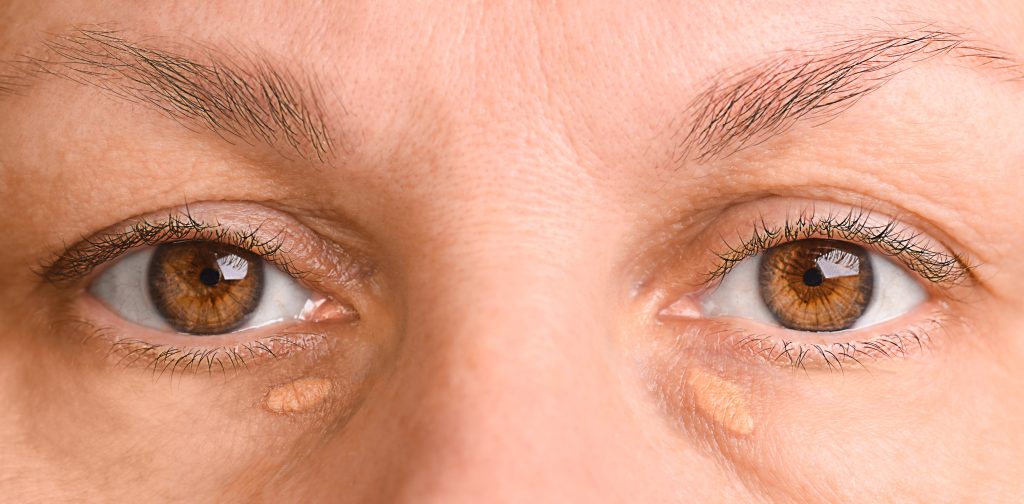
Xanthelasma are soft, yellowish cholesterol-rich plaques that typically develop on the upper or lower eyelids, most commonly near the inner corners of the eyes. They form within the superficial dermis and, while benign and painless, can become more noticeable over time.
Why Do Xanthelasma Develop?
Xanthelasma are composed of lipid-laden foam cells deposited within the skin. Contributing factors may include:
- Elevated cholesterol or triglycerides
- Familial hyperlipidaemia
- Increasing age
- Genetic predisposition
- Certain metabolic conditions
Some patients have no obvious underlying systemic abnormality.
Although xanthelasma are often associated with lipid metabolism disorders, many patients with normal cholesterol levels also develop them. For this reason, it is always a good idea to arrange a clinical assessment and blood lipid testing with your GP.
Book a Consultation
If you are concerned about xanthelasma or would like to explore removal options, a clinical assessment can determine the most suitable treatment for your individual case. Early treatment of smaller lesions often produces the most favourable cosmetic outcomes.
Should you prefer more information before your consultation, please email us at cheshirelasers@hotmail.co.uk so we can send your query to Dr Allen. Enclosing a photograph can often be helpful.
To book, phone 01606 841255 or book your appointment online here:

View Dr Will Allens Prices here.