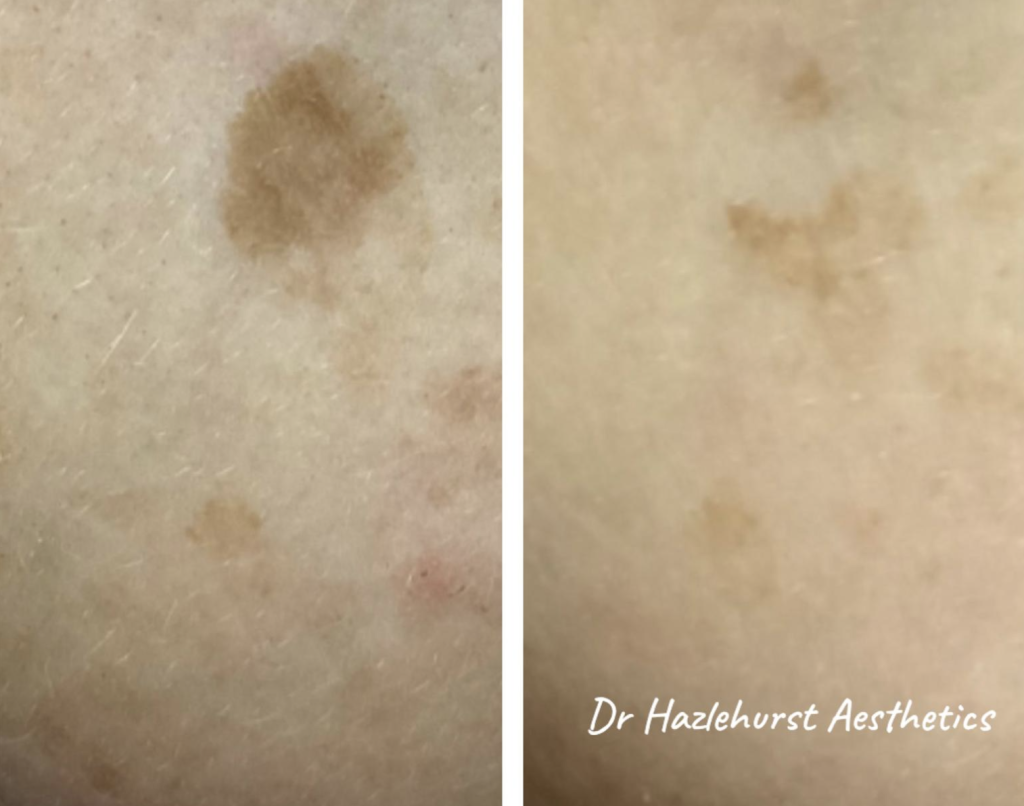
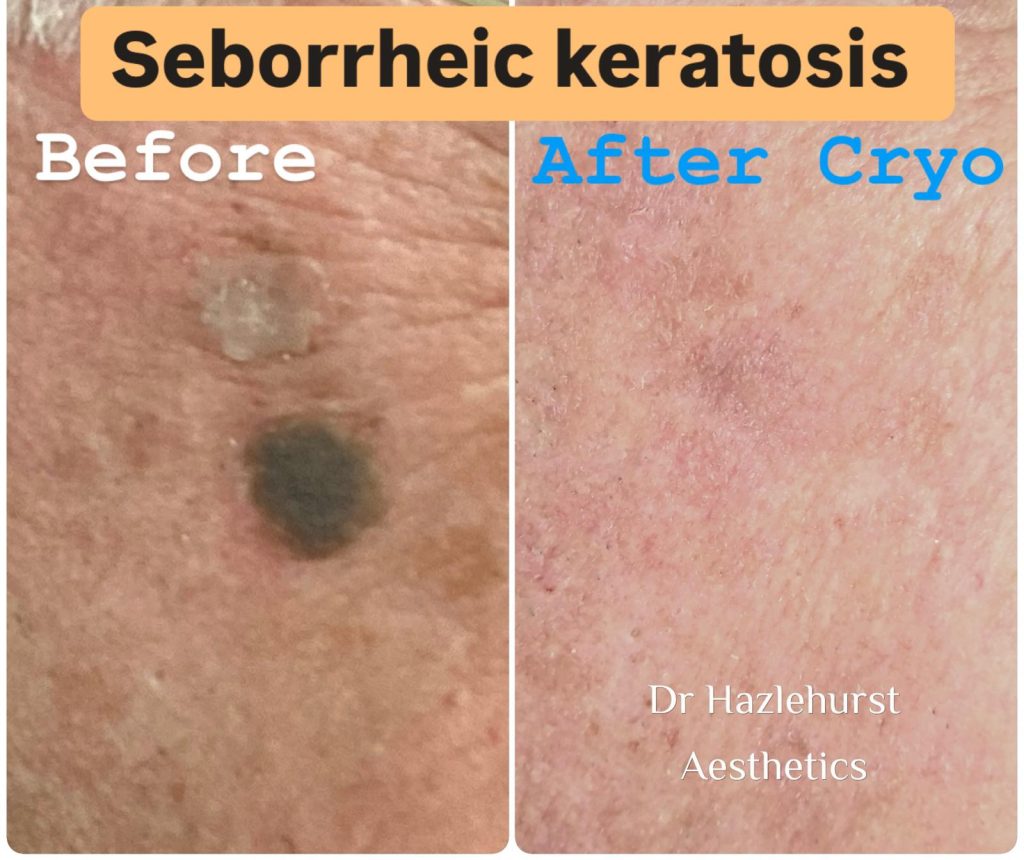
What is Cryotherapy?
The term ‘cryotherapy’ literally means ‘treatment using low temperature’. The treatment removes / treats skin lesions by freezing them.
Cryotherapy can treat a variety of skin lesions
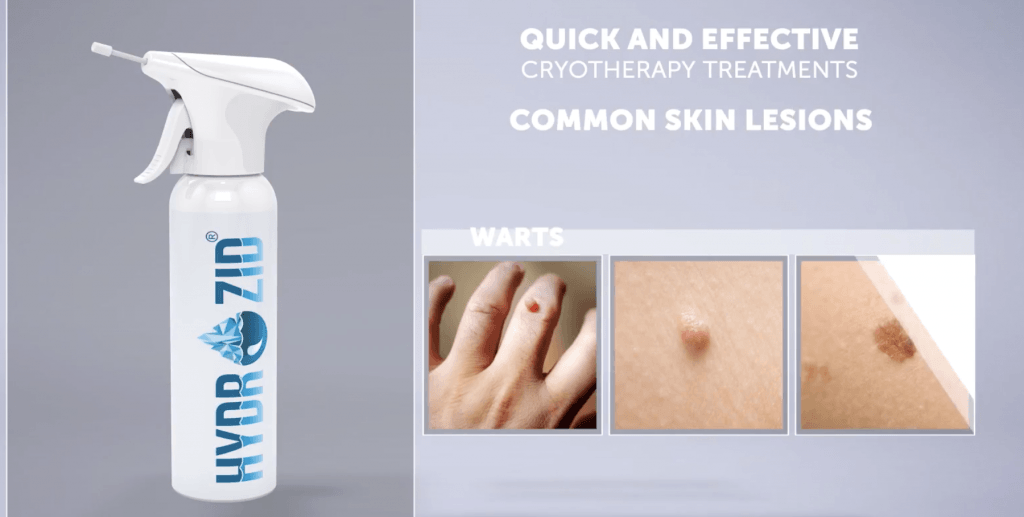
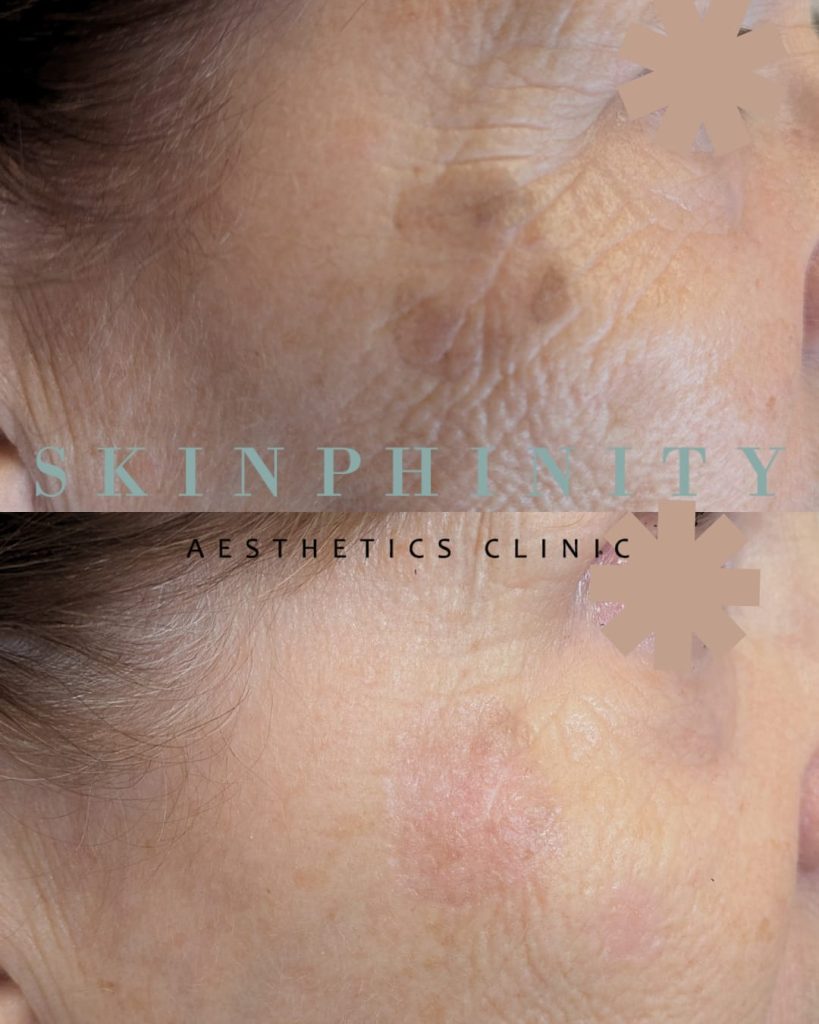
A wide variety of superficial benign (non-cancerous) lesions can be treated with cryotherapy. It is most commonly used to remove skin tags, viral warts, seborrhoeic keratosis, age spots and other benign lesions.
What does the procedure involve?
Cryotherapy can be performed in clinic without any special preparation
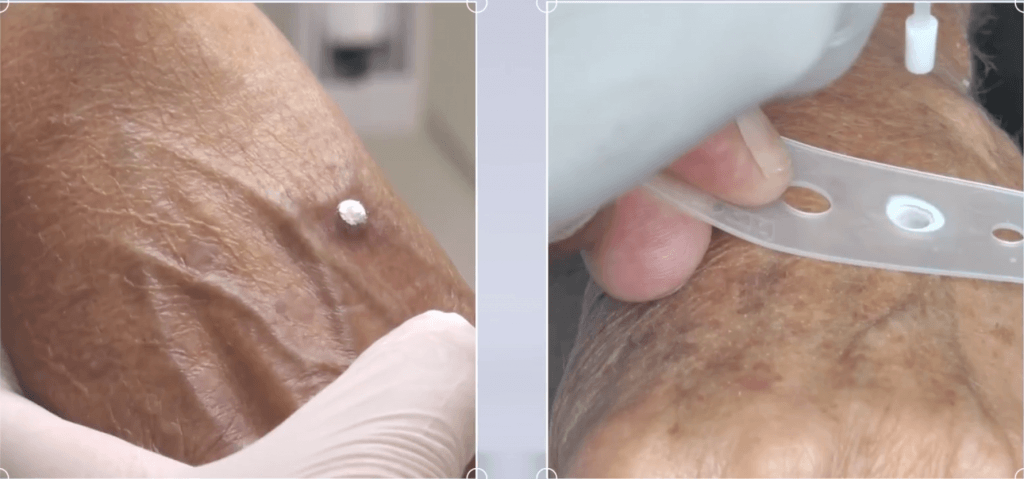
At Cheshire Lasers, Dr Kathryn Hazlehurst, Dr Kyra Drinnan, and Dr Will Allen perform cryotherapy. They use a gas canister that sprays the skin lesion with a gas that freezes the lesion, bringing it down to temperatures as low as -103 degrees.
Although there is slight local pain felt, cryotherapy does not normally require a local or topical anaesthetic and the procedure itself lasts a matter of seconds; the precise time depending on the thickness and size of the lesion. The frozen skin becomes white and takes one to two minutes to thaw to normal skin temperature. The process is repeated once the skin has thawed out, up to 6 cycles.
Over the succeeding few days, a scab will form, and this will take one to two weeks (and occasionally a little longer) to fall off. Usually, the treated area will eventually look normal, although scarring and discolouration is possible, depending on your skin type & healing abilities.
How many treatments do I need?
This depends on the nature of the lesion and its size. More than one treatment may be necessary; if so, we recommend a repeat treatment after 2-3 weeks.
How should I care for the treated area?
Try to keep areas dry & not knock any scabs. It is important not to pick at the scab, as this will encourage scarring.
What are the side effects of Cryotherapy?
Immediate common side effects include:
Pain
Cryotherapy is uncomfortable, it is usualy only painful if a deep freeze is necessary.
This discomfort can occur both at the time of treatment and for a variable time thereafter. Painkillers (such as paracetamol) taken for the first 24 hours may relieve that discomfort; also taking a painkiller an hour or so prior to anticipated treatment can reduce the discomfort.
Swelling and Redness
This is a normal immediate response to freezing the skin, and usually settles after two to three days. For a short while the treated area may ooze a little watery fluid. Cryotherapy close to the eyes may induce prominent puffiness of the eyelids which settles within days
Blistering
Blistering can be a consequence of cryotherapy, and blisters settle after a few days as the scab forms. Some people blister more easily than others. Occasionally, the blisters may become filled with blood; this is harmless, and only if a blister is very uncomfortable would it be necessary to puncture it, using a sterile needle in a clinic.
Rare, less common subsequent side effects include:
Infection
Infection is uncommonly, infection can occur, resulting in increased pain and the formation of pus: this may require topical antiseptic or antibiotic therapy.
Scarring
Rarely, a scar will form, especially if a deep freeze has been necessary & depending on skin type.
Pigmentation changes
The skin at and around the treatment site may lighten or darken in colour, especially in dark-skinned people. This usually improves with time, but may be permanent, depending on your skin.
Numbness
Numbness can occur if a superficial nerve is frozen. In which case numbness of the area of skin the nerve supplies can occur. Normal feeling usually returns within a matter of months. Treatment may not be effective, or the condition may recur, particularly skin warts.
To view our specialists’ prices for Cryotherapy, view their price lists here:
To book for Cryotherapy at Cheshire Lasers phone 01606 841255 or book appointments online here:

Before and after Cryotherapy images provided by Dr Drinnan
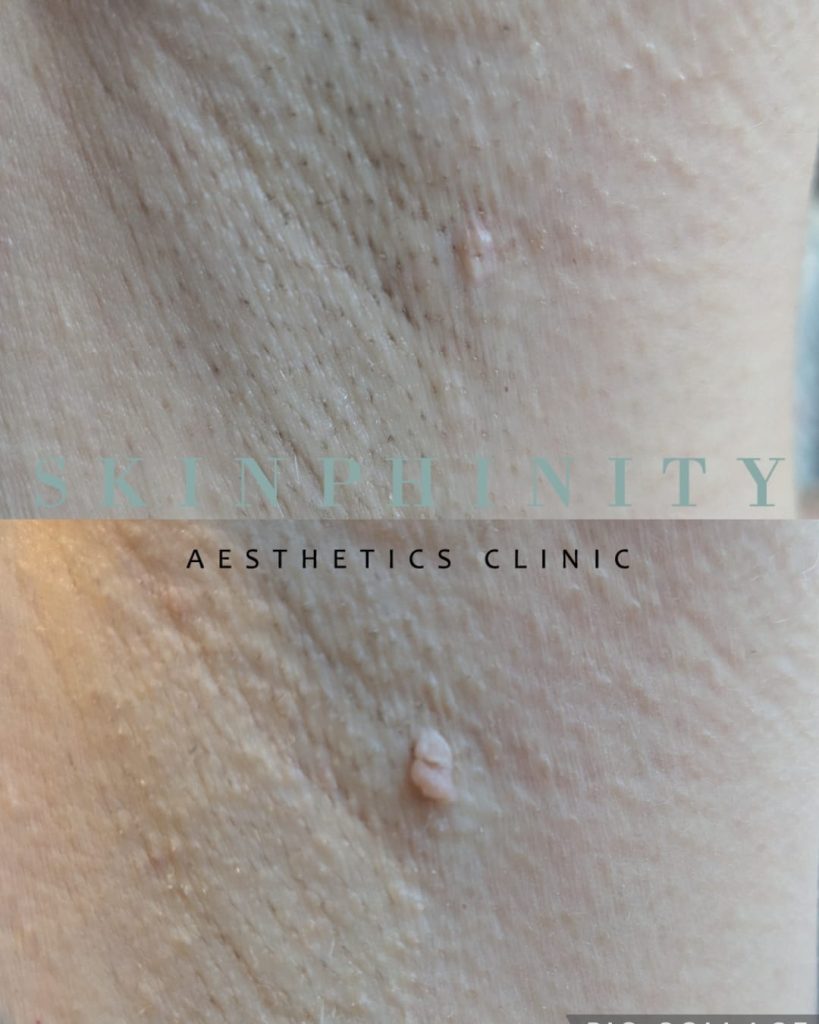
Images provided by Dr Hazlehurst