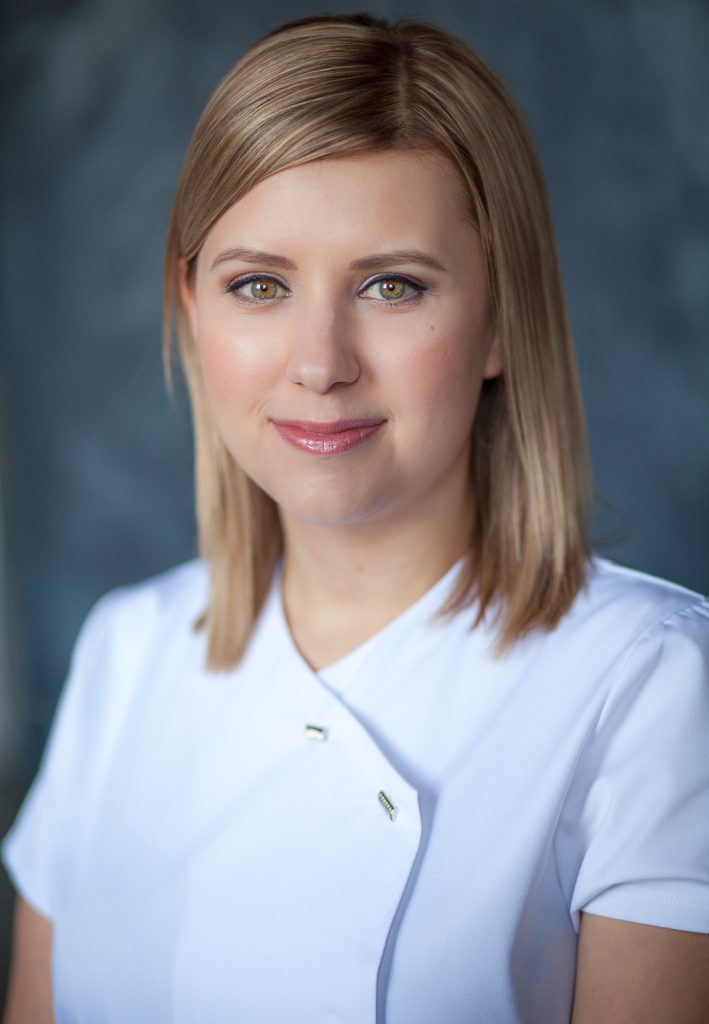
Helena Fryer is an Aesthetic Technician who specialises in Scalp Micropigmentation, Microblading, Advanced Electrolysis for the removal of hair, small blemishes such as Skin Tags, Milia, Thread Veins and Blood Spots. Helena is based here at Cheshire Lasers.
In 2015 Helena trained to carry out Scalp Micropigmentation with one of the world’s leading hair loss clinics on Harley Street in London. Scalp Micropigmentation creates the illusion of real hair using microneedles and semi-permanent ink. Helena went on to manage their Manchester-based clinic, where she helped hundreds of clients who suffered from hair loss, thinning hair and alopecia. In 2016 Helena set up as an Independent Specialist in Scalp Micropigmentation and based herself permanently at Cheshire Lasers Clinic. Find out more about Scalp Micropigmentation here.
Helena was trained to carry out Microblading in 2016. This is a form of cosmetic tattooing where coloured pigment is manually placed into the skin to create the look of fuller brows.
In 2018, Helena trained to carry out Electrolysis for hair removal. Then in the Spring of 2019, she qualified in Advanced Electrolysis to remove small blemishes such as Skin Tags, Milia, Thread Veins and Blood Spots.
When is Helena available for appointments?
Helena is no longer accepting new clients.
She is still seeing exiting clients. Please contact her directly to arrange an appointment with her.
Dr. Noah Sisson-Curbishley DProf., MSc., Pg.Cert., MBACP (Accred.)
Noah is an accreditedPsychotherapist who has a background working in the NHS, charity, private and public sectors. Noah is a university lecturer in counselling and psychotherapy. Noah’s current research is looking at counselling for adult children of emotionally immature / narcissistic parents.
With a Doctorate, an MSc in Advanced Counselling and Psychotherapy, as well as Advanced Clinical Hypnotherapy, Therapeutic Counselling and EMDR training, Noah can offer a bespoke psychotherapeutic approach to life’s challenges.
Noah can help with Abuse, Anxiety, Bereavement, Depression, Identity issues, Relationships, Self-esteem, Self-harm, Sex-related issues, Sexual identity, Sexuality, Spirituality, Stress, Trauma and many others.
Noah is also a yoga teacher and utilises postures, breathwork and meditation into psychotherapeutic work.
Counselling with Dr. Noah Sisson-Curbishley
Noah is a fully accredited psychotherapist and clinical supervisor, qualified in traditional talking therapies, including person-centred work, compassion-focused therapy and mindfulness-based approaches. Noah is also a yoga teacher and utilises breathwork, postures/movement and meditation into psychotherapy if this is something you feel would benefit you.
Noah understands that life’s challenges are as unique and complex as the individual who experiences them. Noah’s aim is to help you work through emotional challenges and realise your full potential in a unique and empowering way. Techniques and strategies can be learnt in sessions to utilise at home to help finding balance and processing your experiences.
Noah’s unique perspective in applying a combination of the following techniques to help you to process emotions and experiences in a gentle and profound way:
Noah offers psychotherapeutic approaches of different modalities so there is no pressure to fit into just one – the approach to the work is as unique as the client. The beauty of this work is you are free to experiment with what you feel is right for you in the moment – everything in the process is guided by you with no pressure, expectation or judgement.
By combining the frameworks and techniques of traditional psychotherapeutic approaches, clients make profound strides in their progress to achieve outcomes that are more positively aligned with their goals. All the techniques can be tailored to your needs or your level of comfort and can be discussed during a free consultation.
Noah has a background working in the NHS, charity, private and public sectors and is also a university lecturer in counselling and psychotherapy. Noah is an accredited BACP member and Pink Therapy accredited.
Counselling with Noah holds valid full insurance.
Noahs Qualifications:
Noah holds a doctorate in social science – specifically social and developmental psychology and is qualified to master’s level in advanced counselling and psychotherapy as well as being a qualified clinical supervisor.
Doctorate in Social Sciences – Social and Developmental Psychology
MSc Advanced Counselling and Psychotherapy
Pg. Cert. Supervision in counselling and psychotherapy
Advanced Clinical Hypnotherapy
EMDR Practitioner
Emotional Freedom Techniques Practitioner
Degree Therapeutic Counselling
Solution Focused Therapy
Narrative Therapy
Are you considering booking counselling with Noah?
Not every counsellor or approach is right for everyone, so Noah offers a free consultation to discuss your needs and what approach would suit you best.
Noah provides therapy for adults and children 11+.
At Cheshire Lasers Clinic, we are often asked: “How can you remove my pigmentation?”
There are many types of pigmentation, with many different causes; some can be treated more easily than others. At Cheshire Lasers, we also have many different treatments that can help you.
The way we treat your pigmentation is based on:
It’s cause
Your skin type
Most importantly, your preferences
How do I decide which Pigmentation treatment to choose from?
At Cheshire Lasers, we offer a wide range of pigmentation removal products and treatments. This makes it hard to decide what to do.
Some treatments work more quickly and are better than others. However, these treatments also tend to cause more side effects, more downtime and are more aggressive.
The gentler treatments tend to take much longer to work. You therefore have to be patient and follow the recommended treatment protocol.
Types of Pigmentation we treat
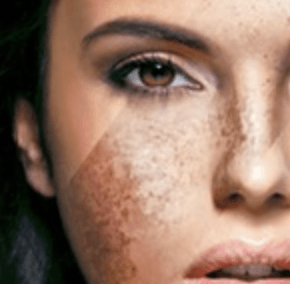
Your skin gets its colour from a pigment called melanin. Special cells called melanocytes in the skin make melanin. When these cells are damaged or activated, melanin production is affected.
☀️ Superficial Pigmentation (Sun Damage & Age Spots)
This type of pigmentation sits in the top layer of the skin and is caused by UV exposure.
Common examples: Age spots (sun spots/liver spots), freckles, Localised sun damage
✔ Well-defined brown marks
✔ Common on face, hands, chest
✔ Responds quickly to treatment
👉 Best approach: remove the pigment
This type sits deeper in the skin and is often triggered by:
Hormones (pregnancy, contraception), heat, and sun exposure and people can also have a genetic predisposition
Example:
Melasma
✔ Patchy or diffuse pigmentation
✔ More likely to return
✔ Requires careful management
👉 Best treatment approach: control pigment production and maintain results
🔥 3. Post-Inflammatory Pigmentation (PIH)
This type of pigmentation develops after skin inflammation or trauma. Common triggers include acne or breakouts, eczema or skin irritation as well as skin injury, picking and aggressive skin treatments or inflammation
✔ Flat brown or grey marks left after healing
✔ Common in acne-prone or sensitive skin
✔ Can affect all skin types (more persistent in darker skin tones)
👉 Best approach: calm the skin + regulate pigment production + gradual fading
Prescription-only Obagi Nuderm System to treat melasma, and moderate to severe pigmentation problems.
Cysteamine products help regulate melanin production, especially effective for melasma and PIH. Used for long-term control and maintenance
ZO Skin Health System and the PhFormula Mela and Tranexamic acid products for pigmentation problems.
What do I do if I want pigmentation removal at Cheshire Lasers?
We recommend an initial consultation with one of our specialists for pigmentation problems before starting any treatment.
It is helpful to know what sort of treatment you are interested in so we can book you with the right person.
If you are considering starting any pigmentation treatment, ensure you do not plan any sun exposure for the next few months. If you go out in the sun, you will need to cover the area with very high sun protection and keep it covered.
For laser/IPL treatment, you MUST NOT HAVE A SUNTAN during treatments and must avoid the sun completely for 4 weeks after a course of treatment.
The sun will stimulate pigmentation and undo the results of your treatments. It can also increase the risk of complications in your treatment.
At Cheshire Lasers, Pigmentation Removal Treatments are provided by:
Dr Hazlehurst uses the topical prescription Obagi NuDerm system, she also uses cryotherapy for small localised patches of superficial sun damage. Dr Hazlehurst also performs the CliniCare Glow Peel and the Blue Radiance Peel.
Sultana uses IPL and, sometimes, the ND: YAG to treat pigmentation with our Lynton Lumina ASQ system.
She also uses Cysteamine Creams, excellent for most pigmentation concerns, including melasma and darker skin types.
Sultana also uses the ZO Medical system and the PhFormula Mela Products for pigmentation problems.
Sultana also performs a wide range of facial peels and all of our resurfacing treatments designed to improve mild to moderate pigmentation as well as skin texture.
Booking a consultation
Please give us as much information about your concern when booking so we can ensure you get the most from your consultation.
You can book either of the following appointments with Sultana:
Book a consultation with Dr Hazlehurst to discuss Cryotherapy, her skin peels and the Obagi NuDerm system for more stubborn pigmentation.
During your consultation
We will examine your skin, take your medical history, and help you decide on the most suitable treatment. We will also discuss the risks, costs and recovery period associated with the procedures you are considering.
The challenge of treating Melasma and pigmentation is that it commonly relapses after treatment.
The most important way of preventing pigmentation is to wear good sun protection all year round and a sun block in the Summer.
Try and avoid any other triggers that may stimulate the problem.
To prevent Melasma and stubborn pigmentation returning, maintenance therapy is required. You can opt for repeat treatments once the pigment has returned. However, we usually recommend selected topical skin care. If you start it immediately after treatment with regular reviews at the clinic in case your regimen needs changing, we can help you manage the pigmentation to reduce the risk of it returning.
Jen is a person-centred counsellor who can offer a safe space for you to talk without fear of judgement. Jen recognises that talking to family or friends can be difficult at times, which is where counselling can really help to make a difference in your life.
Jen believes that by engaging in counselling and developing a non-judgemental and supportive relationship based on trust, together we can find a way to help you to understand yourself better.
Jen works using the person-centred approach, which is non-directive, and you will work together, as she truly believes that you are the expert in yourself, not her. By working together, Jen hopes that you can gain an understanding of what it is you want to focus on, and start to facilitate change where you can feel empowered to live your life, the way you want to.
Jen has worked for over 20 years in social care, with people with learning difficulties, autism, physical disabilities and the elderly, and loves that she is still able to make a difference to the lives of people in my work as a counsellor.
As well as her private work, Jen also volunteers for an organisation providing counselling to survivors of abuse, predominantly childhood sexual abuse.
Jen is registered with the British Association for Counselling and Psychotherapy (BACP) and works within their ethical framework.
Are you considering booking counselling with Jen?
Jen appreciates that not every counsellor is right for everyone. She, therefore, offers a short introductory call/ video call where you can ask any questions you may have. This gives you the opportunity to see if you feel embarking on counselling sessions with her will work for you, and also allow her to assess if she can offer what you are looking for.
Jen works with the following issues:
Abuse
Addiction
Bereavement
Depression
Learning Difficulties
Post-Traumatic Stress Disorder (PTSD)
Relationship problems
Self- Harm
Stress
Suicidal Thoughts
Trauma
Jen’s Qualifications
Level 4 Diploma in Therapeutic Counselling
Level 3 Counselling
Level 2 Counselling Skills
BA (Hons) Applied Community Studies
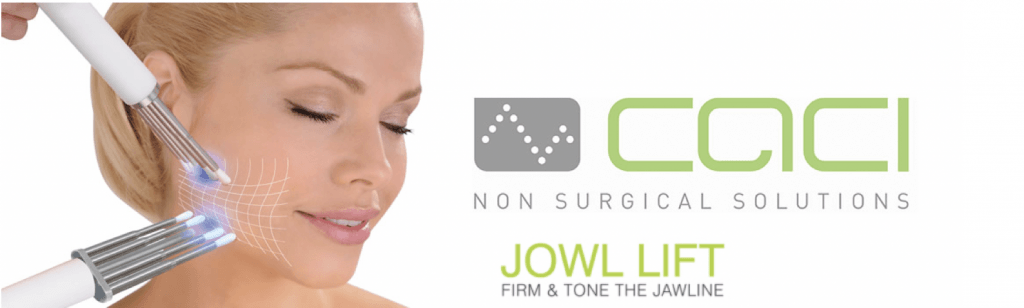
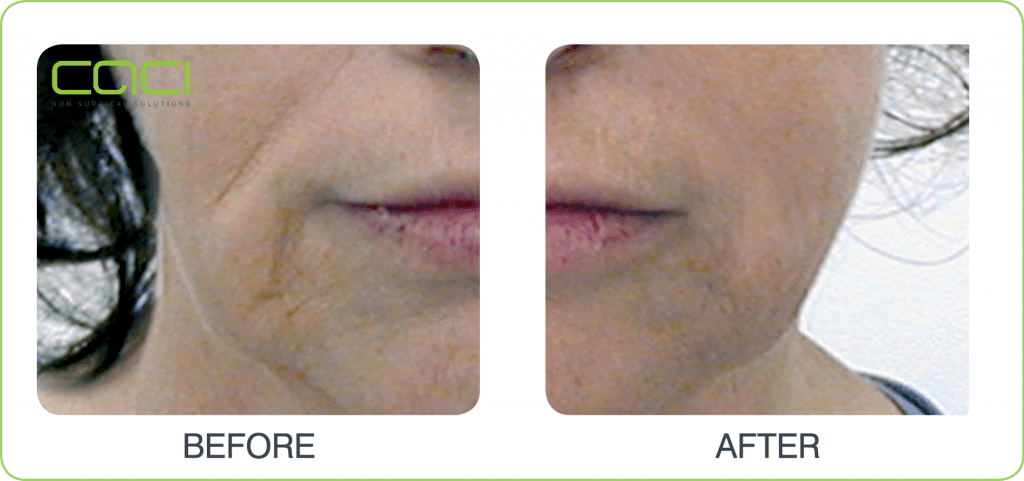
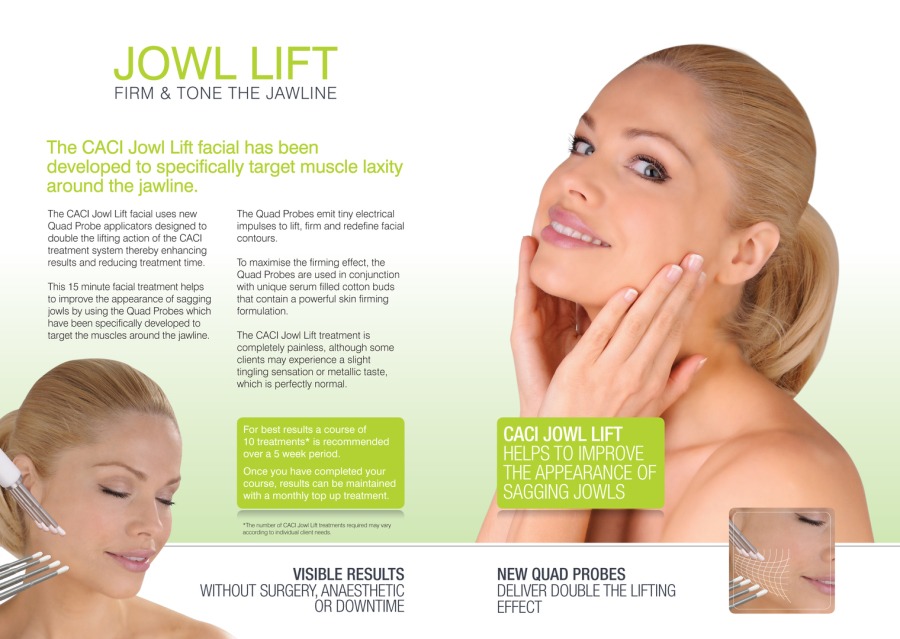
The CACI Jowl Lift has been developed to target muscle laxity around the jawline. It aims to improve the appearance of sagging jowls by lifting and firming facial contours to help achieve a natural, younger look without discomfort or downtime.
What is CACI?
CACI stands for Computer-Aided Cosmetology Instrument and is a system used for non-surgical facelifts. CACI treatments involve using micro-current energy, which is transmitted to the skin and muscles, stimulating increased muscle tone and collagen production. This leads to a lifted, firmer and refreshed appearance.
What is a CACI Jowl Lift?
The CACI Jowl Lift facial uses Quad Probe applicators designed to double the lifting action of the standard CACI treatment system, thereby enhancing results and reducing treatment time. These Probes send tiny electrical impulses into the lower half of the face and the upper neck area to tone the muscles, improve skin elasticity and reduce the appearance of fine lines and wrinkles, and redefine facial contours.
There is also a unique serum in the Quad Probe tips, this contains a powerful skin-firming formula to maximise the firming effect.
Before and after a course of CACI Jowl Lift Treatments
How long does a Jowl Lift Treatment take?
This CACI Jowl Lift takes only 15 minutes to perform. This is due to the Quad Probes specifically developed to target the muscles around the jawline.
At Cheshire Lasers, we recommend you schedule 30 mins when booking your owl Lift appointment.
Does it Hurt?
The CACI Jowl Lift treatment is completely painless, although some clients may experience a slight tingling sensation due to the micro-current or a metallic taste, which is perfectly normal.
How many treatments do I need?
The number of CACI Jowl Lift treatments needed may vary according to an individual’s needs. Cheshire Lasers recommends a course of about ten treatments over five weeks for best results.
When will I see results?
Results will be seen throughout the course. However, these are often short-lived at first. By five treatments, you usually start noticing improvements in your skin’s tone and texture. You will then see gradual improvements in the jowl as the muscles start to firm and tighten.
Do I need maintenance after the course?
A monthly maintenance session will help maintain results and your new and improved muscle tone.
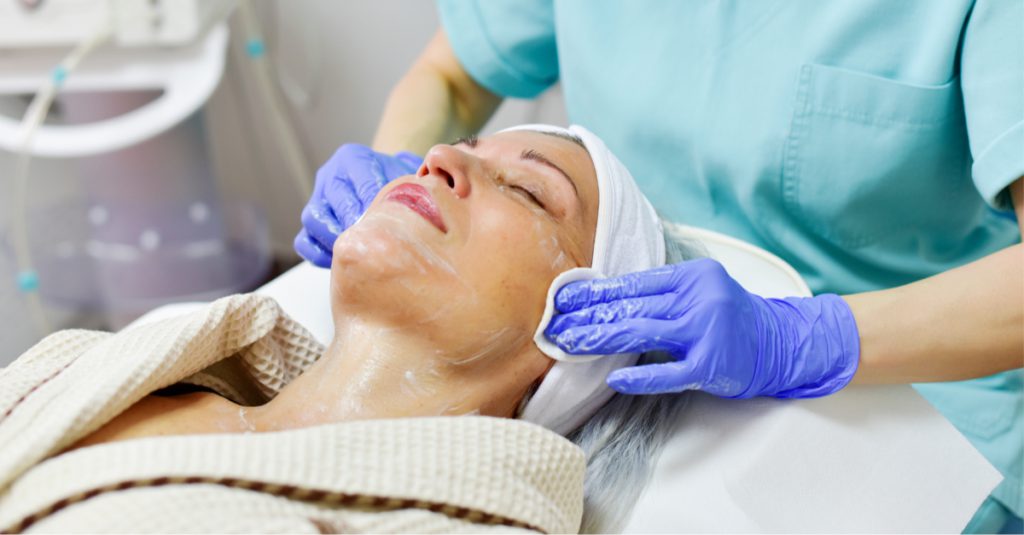
Cheshire Lasers provides Hyaluronidase Treatments, also known as Hylase Treatments, to dissolve Dermal fillers.
What is Hyaluronidase?
Hyaluronidase is an enzyme that dissolves hyaluronic acid. It is a prescription-only treatment which is also known as Hylase.
Which Dermal Fillers can Hyaluronidase can dissolve?
It works best on Dermal Fillers, which consist primarily of hyaluronic acid. The enzyme hyaluronidase quickly gets to work by breaking down the filler just a few minutes after injection, which is then broken down and removed within a few hours. However, it can take a few days to see the final result.
Dermal Fillers that can be dissolved with Hylase include:
Hyaluronidase is ineffective on Radiesse, Ellansé, Artefill, Silicone, Sculptra or other non-HA fillers.
Who performs the Hyaluronidase treatments at Cheshire Lasers?
All the specialists that provide Dermal Fillers at Cheshire Lasers Clinic have Hyaluronidase training so they can dissolve the filler they inject should a problem occur after treatment.
The following Specialists also perform hyaluronidase treatments for patients who have had treatments elsewhere.
Dr Kyra Drinnan
Dr Kyra Drinnan treats patients who have had treatments performed by other practitioners if the practitioners who performed the treatment make a direct referral. The referral must include a full medical history, the type of product injected, the amount injected and where it was injected. The batch number and expiry date must also be included.
Dr Will Allen
Consultant Facial Plastic Surgeon Dr Will Allen, provides filler dissolving treatments using hyaluronidase at Cheshire Lasers. For more complex cases, he also offers surgical filler removal at one of his specialist clinics, where he performs surgical procedures.
What does a Hyaluronidase Treatment involve:
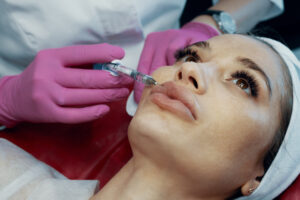
The enzyme is injected the same way as any other injectable treatment, either with a needle or a cannula. The effects can be seen after several minutes, but it takes a few days to see the full results. Hyaluronidase is not new, it has been used by doctors for injections for years, most commonly to assist the spread of local anaesthetic solutions.
Does Hyaluronidase treatment hurt?
The treatment is a little uncomfortable, similar to other injectable procedures.
To minimize discomfort, we use a topical anaesthetic to numb the area before the injection.
We can also inject it with lidocaine, a local anaesthetic, to numb the area during the procedure.
How many Hylase treatment sessions will I need?
Sometimes you may only need a single treatment. This depends on the type of dermal filler we are dissolving and the volume we are trying to remove.
If you require further treatment, we prefer to leave at least five days between sessions to allow the first treatment to work fully.
Sometimes we may need to use Hyaluronidase in an emergency to prevent a complication such as a vascular occlusion. In this situation, we repeat the treatment every hour to restore circulation.
Which areas can Hylase treat?
The most common requests at Cheshire Lasers for hylase treatment are to dissolve lip fillers and tear trough fillers. These two areas are more prone to dermal filler migration, which can cause a poor cosmetic outcome.
Most areas treated with hyaluronic acid-based dermal fillers can be treated with Hylase, including:
Lips fillers
Migrated lip fillers
Tear Trough fillers
Nasolabial lines
Perioral lines (smokers’ lines around the mouth)
Chin fillers
Cheek fillers
Under eye area
Are there side effects of Hyaluronidase filler dissolving treatment?
There are very few reported side effects with Hyaluronidase.
The commonest side effects are bruising which is usually minimal, and swelling.
Localised allergic reactions to the enzyme can occur. For this reason, we will book you in for a consultation and a patch test at least 24 hours before the procedure.
If you are allergic to bee venom or suffer anaphylaxis, you are more likely to react to Hyaluronidase. We do not recommend Hylauronidase unless the benefits of treatment significantly outweigh the risks.
How do I book a Hyaluronidase treatment at Cheshire Lasers?
After Dermal Filler Treatment at Cheshire Lasers
If you want to dissolve a dermal filler after treatment at Cheshire Lasers, please contact us. We will book you a consultation with the doctor/nurse who performed your treatment to assess your needs and advise you further.
After Dermal Filler Treatment elsewhere
If your dermal filler treatment was performed elsewhere, and you would like it dissolved, we usually recommend contacting the practitioner who performed it. They will know the quantity of filler in each area and the type of filler. With this knowledge, it is much easier to perform a treatment. All medical aesthetic practitioners should be able to provide this treatment if performing Dermal Fillers.
When a dermal filler treatment goes wrong, we understand that sometimes you may not want to return to your original practitioner. It can also be difficult when you move and your practitioner is too far away. In these circumstances, please get in contact.
How much does a Hyaluronidase Treatment cost at Cheshire Lasers?
Our Specialists all have their own price lists.
Generally, expect to pay between £250 and £500 for this advanced procedure.
How to Book a Hyaluronidase Treatment
If you are interested in this procedure, please complete this enquiry form, and we can forward it to our doctors to make sure they can help.
Please let us know as much information as possible about your treatment. It is helpful to know the product used, the location of the injections and the quantities at each injection site. This information will help us give you the best possible advice to help you achieve the best outcome.
This information will also help our client coordinators recomend the best specialist to help you. If your problem is difficult to treat, we can signpost to an expert in dealing with more complex problems.



 Cheshire Lasers provides Hyaluronidase Treatments, also known as Hylase Treatments, to dissolve Dermal fillers.