During these times we are open and our our client coordinators are happy to help you book an appointment on 01606 841255
Opening hours
Monday
9.00 – 20.00
Tuesday
9.30 – 20.00
Wednesday
9.00 – 20.00
Thursday
9.30 – 20.00
Friday
9.00 – 18.00
Saturday
9.00 – 17.00
Sunday
One a month
At Cheshire Lasers you can book your appointments:
By Phone
Online
By Email
By Phone
On 01606 841255
Online Booking
Most of our specialists have online booking however a few prefer to control their own diary and you may need to contact them directly to arrange an appointment.
Some people prefer to email us to book an appointment.
Please be aware we often find that if there is a time delay on receiving a reply to an email can result in the appointments offered being booked up before we get a reply.
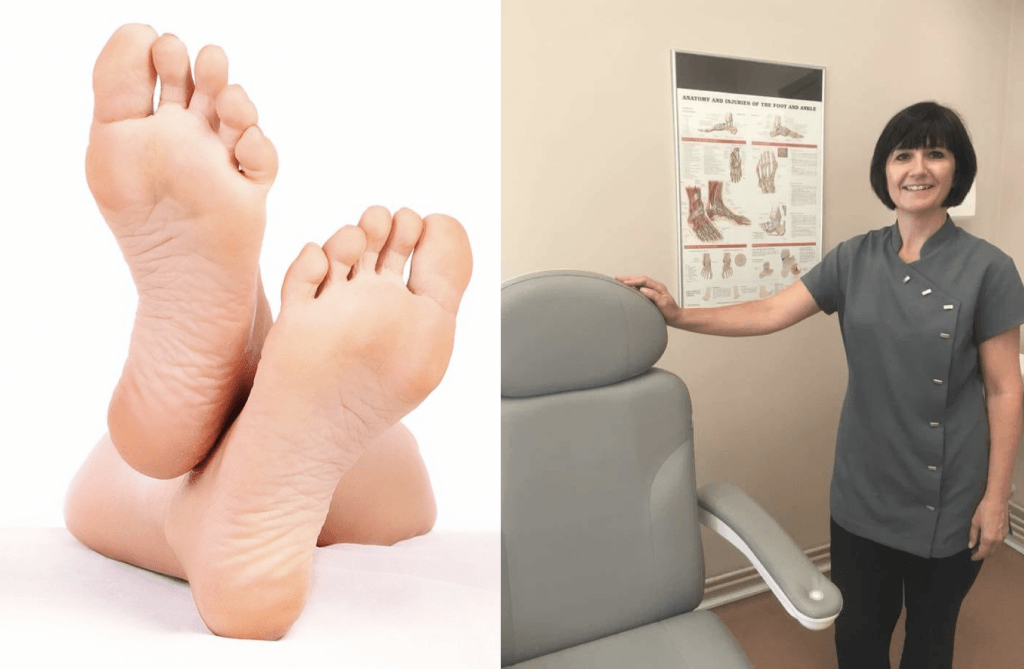
Samantha Hatton owns SJH Podiatry at Cheshire Lasers in Middlewich.
She graduated from the University of Westminster in 1992 with a degree in Podiatric Medicine. Samantha is registered with the Healthcare Professions Council (HCPC), and a member of the College of Podiatry.
Samantha has worked extensively within the NHS for over 25 years encompassing several clinical and managerial tasks. A large proportion of her time was spent as a Diabetes Specialist Podiatrist,, and she is particularly interested in vascular disease.
Samantha is local to Middlewich and now works solely as a private podiatry practitioner. She continues her education to provide the best advice and treatments for all clients, regardless of age or medical conditions, including children.
She ensures that she follows the College of Podiatry code of conduct and her registration with the HCPC can be confirmed by following this link: https://www.hcpc-uk.org/check-the-register/
Samantha has her own Podiatry Clinic at Cheshire Lasers Middlewich, where she works with her associates, Andrew and Wendy.
They take measures to reduce any risk of cross-infection. Use sterilised instruments, and all records are strictly confidential.
What to expect at your appointment:
At your initial podiatry appointment, a general medical history will be taken, including details of any medication, lifestyle, allergies etc. A basic foot examination will include an assessment of your circulation & nerve supply, a basic structural examination, and a discussion of your foot problem. Samantha can then recommend a treatment plan.
Samantha can see anyone with any medical condition regardless of age (including children).
The CACI Eye Revive Treatment is performed by our Cheshire Lasers Aestheticians.
The new CACI Eye Revive treatment is a must-have for anyone concerned with ageing around the delicate eye area.
This gentle treatment:
Soothes tired, puffy eyes
Combats dark circles
Reduces fine lines and wrinkles.
Lifts hooded eyes
What is a CACI Eye Revive treatment?
The CACI Eye Revive treatment involves three steps.
Step 1:
This involves micro-current to gently tighten and tone sagging muscles around the eye area whilst reducing the appearance of fine lines and wrinkles.
Step 2:
The treatment then uses serum-filled CACI micro-current eye rollers to infuse the CACI Eye Revive serum deep into the skin. The roller ball is used to perform a drainage massage. The drainage massage helps to eliminate toxins around the eye area these actions help reduce puffiness and dark circles.
The Eye Revive serum contains REGU®-AGE and other clinically effective ingredients which, have been shown to reduce puffiness by up to 31% and dark circles up to 35%.
Step 3:
The deeply nourishing Hydro Eye Mask is then applied to soothe and calm the skin and reduce fine lines and wrinkles further.
The Hydro Eye Mask feels and smells divine. The cooling sensation around the eyes is relaxing and leaves the eyes looking brighter and more hydrated. The mask contains hyaluronic acid, collagen, green tea and cucumber to help plump out fine lines and wrinkles.
Am I suitable for a CACI Eye Revive treatment?
The CACI Eye Revive treatment is suitable for all skin types and delivers impressive results to keep you looking fresh and revived.
How many Eye Revive treatments will I need?
Cheshire Lasers recommends a course of ten CACI Eye Revive treatments for optimum results. We also advise you to book the sessions close together; however, a one-off session is also beneficial and the perfect ‘pick me up’. It instantly wakes tired eyes and makes you feel vibrant and confident.
If you have a wedding or a special occasion coming up, a one-off will give a quick lift around the eye area. The perfect confidence boost!
It takes around 35 minutes per session. So you could have one in your lunch break and go back to work all revived!
At Cheshire Lasers, we often combine the CACI Eye Revive with other CACI treatments. The most popular combination is the CACI Jowl Lift with the Eye Revive.
Bereavement Counselling is provided at Cheshire Lasers by Noah
What is Bereavement Counselling?
Bereavement counselling is a specialist type of counselling that focuses on the loss of a special person in your life. It helps you work through the feelings of grief and together with your counsellor, you can work thought the overwhelming and often chaotic thinking that is associated with the loss of a loved one.
In addition to this, Jamie offers therapy specific to pet bereavement, as the loss of our beloved pets can be very traumatic to some and challenging to overcome. Here at Cheshire Lasers, no loss is too big or too small, and Jamie fully understands that any loss can lead to significant and long-lasting problems.
What are the processes of Grief?
Bereavement is one of the most difficult times in any person’s life, and it can catch us completely off guard. There is no right or wrong way to grieve, as it is a very personal process that affects each of us very differently. Many different emotions can be felt right after a significant loss, including:
numbness
shock
anger
guilt
sadness
depression
pain
longing
desperation
Unfortunately, there is no set timeline for this process and people can jump between emotions for months or even years!
The loss of a beloved family member, a friend or even a pet can lead a person into a long cycle of loss and grief that can feel overwhelming.
How can Bereavement Counselling help?
Counselling can be a place where you can try to make sense of the chaos that you are feeling. It is a place where you can be yourself and grieve in the way you need to without having to worry about how it may be affecting the loved ones that are left. You can talk openly about any of the experiences you are having in a safe environment. Talking to a warm and empathetic ‘stranger’ can be a hugely rewarding experience and may help you get to a place where you can remember your special person or pet in a way that brings joy to your heart and get beyond the sadness of your loss.
The grieving process is one of the most challenging times in a person’s life. However, in counselling, you can explore the emotional and practicalities of your loss, whatever the form. Working together with your therapist can help you find your new normal!
At Cheshire Lasers Clinic, Sharron Roughton provides Reflexology for Pre-Conception Care
What is Reflexology?
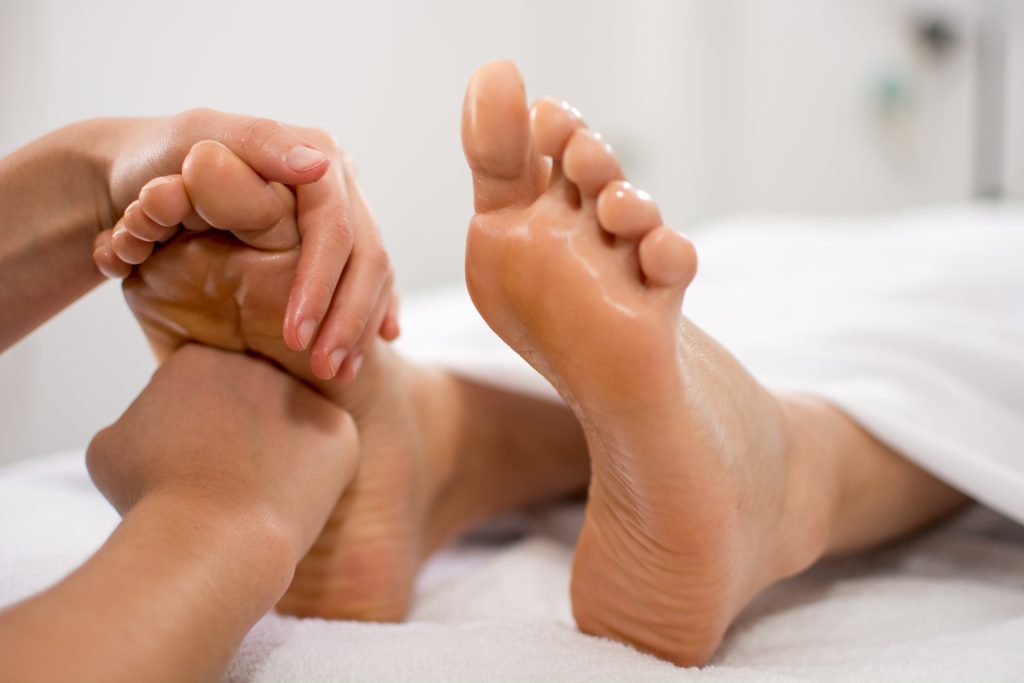
Reflexology is based on the principle that certain reflex points on the feet are linked to different organs of the body. When the points on the foot are stimulated by massage, it is thought that this then stimulates the corresponding organ.
How can Reflexology help with Pre-Conception care?
Reflexology may enhance fertility by improving blood circulation throughout the body. This encourages the elimination of toxins from the body as well as aiding relaxation and reduces stress, all factors that may affect the body’s natural cycle and balance. Ultimately this can have a positive effect on wellbeing and encourage the body’s natural healing, and best possible conditions for conception to occur.
Reflexology can Enhance your general health in preparation for conception. Supporting you safely and effectively to enhance your natural fertility. Reflexology may help couples with fertility problems by strengthening the immune system, balancing the hormone production necessary for conception to occur. It also promotes good health and vitality in the reproductive organs, which includes helping to regulate periods, promote ovulation, reduce PMS, reduce the chances of miscarriage and also help increase sperm quality and quantity.
Fertility problems can be very stressful and a course of reflexology can also provide the relaxation needed to help return the body to its natural balance ready for parenthood.
Is Reflexology for Pre-Conception care just for women?
No, ideally, both the male & female partners would have treatments, particularly in the cases of unexplained infertility.
When is the best time to start Reflexology for Pre-Conception care?
Ideally, 3 months is the best time for couples to start preparing, as it takes this long to produce healthy sperm and 1 month for a healthy egg.
Does Reflexology for Pre-Conception Care Work?
Many women have found that the ancient art of reflexology can make a difference. Many believe that regular treatments helped them become pregnant.
In order to have the maximum effect, Sharron will take a holistic approach, in case anything else may be preventing pregnancy. Stress or worries at home or work, for example, can negatively impact the body’s equilibrium. Lifestyle factors—diet, exercise, and water intake—are also important.
Some years ago a Devon-based reflexologist, Jane Holt, was involved in the setting up of a randomised controlled research trial. The trial was undertaken at Derriford Hospital, Plymouth, ‘to determine the effectiveness of reflexology in ovulation induction’. Around 30 women, from a total of roughly 100, apparently became pregnant. Unfortunately, detailed results of this very small survey are hard to come by. Therefore anecdotal evidence is the best that we can do at present.
Although a small study, it is also supported by some hospitals and midwives:
The science behind how Ultraformer Treatments work
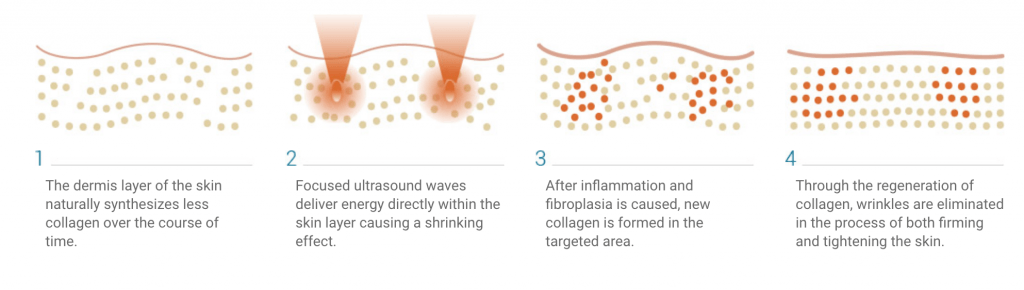
Ultraformer III is a revolutionary skin-lifting treatment. It uses the gentle, safe, time-tested energy of ultrasound at a micro-focused level to create a powerful energy. This energy stimulates the deep structural support layers of the skin, including those areas focused on during surgical treatments. However, Ultraformer III does not cut or disturb the surface of the skin and has none of the risks associated with surgery.
This advanced technology can create a lift not only in the skin but also the deep muscle layer underneath, which was previously only reached by a surgical facelift.
The Ultraformer III also stimulates the growth of new collagen over time, to gradually strengthen and tone your skin from deep within.
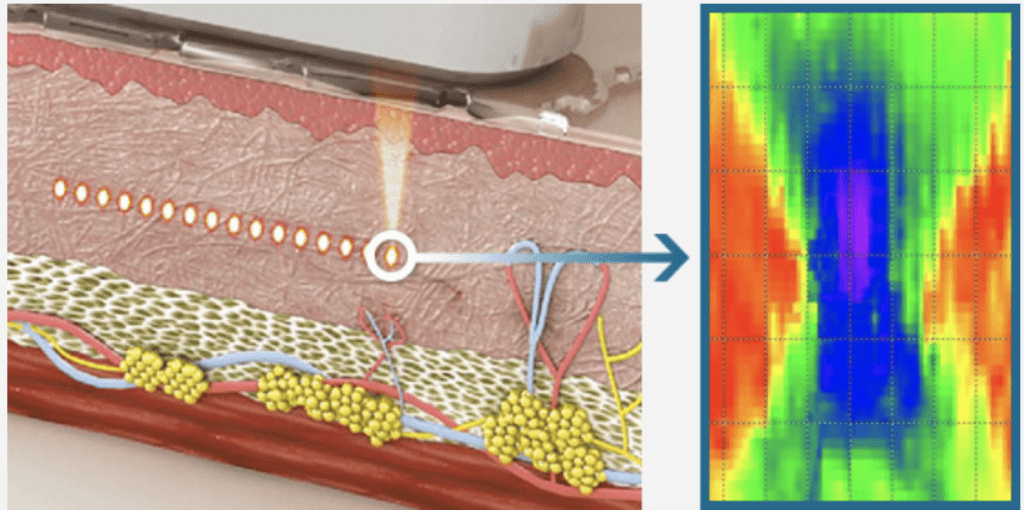
The Ultraformer HIFU cartridge has a narrow focus delivering precision treatments. Uniform ultrasound energy is directed into target layers of skin without heat diffusion to surrounding tissue, yielding less pain, minimal side effects, and more effective results.
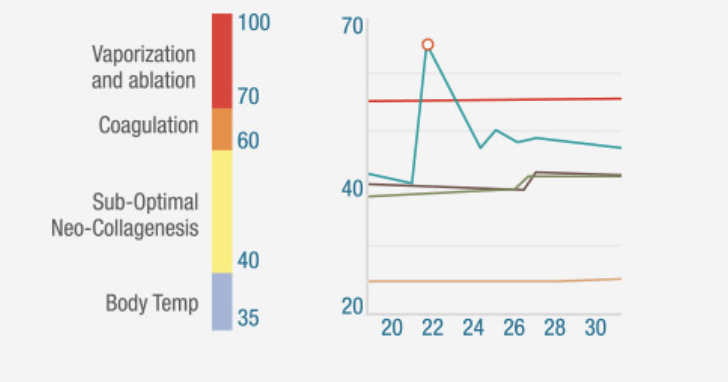
Generating approximately 65.4°C into target layers induces natural coagulation and wound-healing processes to stimulate collagen renewal underneath the epidermis.
How is the Ultraformer different from Radiofrequency (RF)?
Radio Frequency (e.g. Endymed, Thermaclinic) addresses issues in the superficial layers of the skin (e.g. fine lines, wrinkles, skin tone and texture). The Ultraformer can treat this area, but it can also address the deeper skin layers and the foundational muscle layer known as the SMAS that lifts and supports the skin. This is the layer a plastic surgeon targets during cosmetic surgery.
Radio Frequency heats the skin to around 41°C, whereas HIFU heats the skin to 65.4°C. Therefore the Ultraformer treatment is more intense and a bit more painful.
Who do you recommend the Glo Triple Transformation Peel for:
We recommend the Glo Triple Transformation Peel for all but sensitive skin types. It’s good for from dry to oily skin, dull or uneven skin tone and ageing skin and helps reduce the appearance of melasma, freckles and acne.
It is a modified Jessner formula featuring a combination of effective acids to deliver a level 4 peel.
What ingredients are in the Peel?
The key ingredients are:
14% Resorcinol: Targets rough-textured skin. It can also have a numbing effect on the skin.
14% Lactic acid: Gently exfoliates; improves skin tone, texture and fine lines.
14% Salicylic acid: Stimulates exfoliation; helps clear pores and promotes new cell growth.
It also contains smaller amounts of the following: Alcohol Denat, Wine Extract, Rubus Idaeus (Raspberry) Fruit Extract, Glycerin, Lycopene, Water, Phyllanthus Emblica Fruit Extract, Carnosine, Niacinamide, Phenyl t-Butylnitrone.
How often should I have a treatment?
We recommend the Glo Triple Transformation Peel three to four times per year.
What does a Glo Triple Transformation Peel involve?
This treatment is a medium strength peel, it provides a level 4 Exfoliation and is designed to create a more dramatic change in the skin.
You will need a patch test at least 24-48 hours prior to treatment.
This treatment lasts approximately 30 minutes.
Most people experience peeling which usually starts on day three and often lasts up to a week.
The peel can be layered 1-4 times during your treatment. We usually recommend only one layer at your first treatment and this can be built up at subsequent treatments if you want a more dramatic peeling effect/ result.
It takes up to 3 months to see the best results from the peel
What should I do if I would like to try this peel?
You will need a consultation to discuss the peel and discuss your skincare regime. We will perform a patch test for the peel and discuss what to expect.
For best results we recommend you prepare the with a combination of products containing retinol, AHA and or BHA for roughly 18 weeks.
We then recommend that you stop using these products 4-5 days before treatment
What is the aftercare?
We will supply you with barrier balm to apply after the peel to soothe the skin while it is peeling.
You must not pick the peeling skin as this can cause an uneven skin tone, hyperpigmentation and even scarring. s
You must wear SPF and avoid the sun.
Do not restart your usual skincare routine until your skin has stopped peeling.
The medical term for fungal nail infection is Onychomycosis. It is a common complaint often seen by Samantha Hatton our podiatrist at Cheshire. It can be associated with athlete’s foot – Tinea Pedis.
The infection is usually caused by a yeast or mould infection which are types of fungi. It is rarely painful unless the infection progresses and becomes more severe.
How do I know I have a Fungal Nail Infection?
Fungal nail infections cause the nail to become thickened, develop a yellow or brown discolouration, and can start to crumble. They can also appear misshapen and can lift or loosen from the nail bed.
Many conditions can cause this appearance. To diagnose a fungal nail infection you can ask your doctor to arrange an analysis of your toenail clipping at the local hospital, or you can book an instant fungal nail test with one of our podiatrists here at Cheshire lasers.
Factors that increase the risk of Nail Infections:
Nail damage
Diabetes
Psoriasis
Poor Hygiene
Weak immune system
Smoking
Sporting activities causing trauma to the nail i.e. running, kicking, damp shoes
How do I treat a Fungal Nail Infection?
antifungal nail cream – it can take up to 12 months to cure the infection and does not always work
nail-softening cream – used for 2 weeks to soften the nail so the infection can be scraped off
antifungal tablets- taken every day for up to 6 months but needs regular blood test monitoring from your doctor.
Now with the Lacuna Method, there is another effective solution.
What is the Fungal Nail Lacuna Method Treatment?
Several tiny holes are drilled into the nail plate to the nail bed. The number of holes depends on the extent of the infection and also the size of the nail being treated. Once the holes are completed an anti-fungal spray consisting of Terbinafine, is applied over the nail. The holes allow the treatment to reach the source of the infection. This spray is then applied daily at home until the infection is clear.
A review is recommended every 6-8 weeks as more holes may need to be drilled as the nail grows forward.
Any fungal infection of the skin also needs treating to avoid reinfection.
Lacuna Method After Care Advice
Following your Fungal Nail Lacuna method treatment, it is extremely important that you break the cycle of cross-infection, to stop fungal spores from the environment re-infecting your nails. The following advice is essential:
Spray your affected toenail/s with Lamisil spray x2 per day (ideally after showering or bathing but making sure the nail is perfectly dry).SHOULD YOU EXPERIENCE ANY SIDE EFFECTS PLEASE STOP USING THE SPRAY AND WASH YOUR TOES IN TEPID WATER, dry them and contact Samantha our podiatrist who will be able to suggest another medication.
When creaming or moisturising the feet, avoid the toe area.
Avoid 100% cotton or wool hosiery as it holds moisture around the foot. Mixed fibre hosiery will wick moisture away from the foot.
Bamboo socks might be useful as they are more absorbent than cotton, allowing better ventilation.
Replace your socks regularly.(If you wear work boots or shoes for a full day/shift it is advisable to change your socks/hosiery at least once during an 8hrs + day).
Hosiery, bath mats and bedsheets should be washed on as high a temperature as possible – above 50 or ideally 90 degrees. Using Napisan detergent will help to kill fungal spores, as will drying them in a tumble dryer.
Change your shoes daily, and spray them with a fungicidal shoe spray.Wait at least 48 hours before you wear the same pair. This will allow them to dry out.
Sock drawers and shoe cupboards should be cleaned regularly with an anti-fungal solution e.g. Napisan.
Don’t cut your nails yourself as you may reinfect or spread the infection.
Please do not wear nail varnish of any kind.
How much is a Fungal Nail Lacuna Method treatment?
Samantha Hatton the Podiatrist at Cheshire Lasers performs the Lacuna Method treatment at Cheshire Lasers you can view her prices here.